The question posed for this week’s portfolio assignment asks whether the UAE experienced a one-party or dominant party rule. The answer is no, though I identify elements in the UAE political system that resemble these forms of governance. As mentioned previously, the UAE is a federation of seven emirates; each emirate has its own leader (called Emir) and has an autonomy to run economic and social matters.
The Federal Supreme Council (FSC) is the highest policy-making body which elects a President and a Vice President from amongst the seven Emirs. The elected Emir serves for five years and can be reelected. The first President of the UAE (and ruler of Abu Dhabi) Sheikh Zayed bin Sultan Al Nahyan was reelected until his death in November 2004, ending a 33-year long rule. His successor was also elected President, indicating that Abu Dhabi holds a dominant status in the FSC. The FSC ratifies federal laws, is in charge of general policy and approves the nomination of the Prime Minister, making it the ultimate source of power in the UAE.
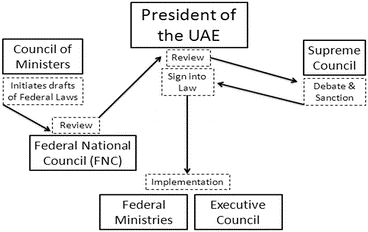
Below the FSC is what may resemble a political party (which are not allowed in the UAE): the Federal National Council (FNC). This council consists of forty members, holding four-year terms. Half the members are chosen by the President while the other half are elected by citizens. The FNC can pass (or reject) federal bills that were decided on in the FSC, oversee the UAE’s budget and advise as well as make recommendations to the FSC. The number of representatives each emirate has on the FNC correlates with the size of the population of each emirate.
In recent years the UAE has made efforts to increase citizen involvement in the political process. While in 2006 the electorate (~7,000 voters) was still hand-picked by the Emirs, the 2019 vote brought more than 330,000 people to the ballots. The last election included 555 candidates battling for 20 seats, indicating an increased involvement of citizens in the political process. Almost half of the candidates were women, encouraged by the President’s decree that women should make up at least 40% of the council. One potential reason for these developments is the Arab Spring, which was perhaps perceived as a threat to the UAE’s regime.
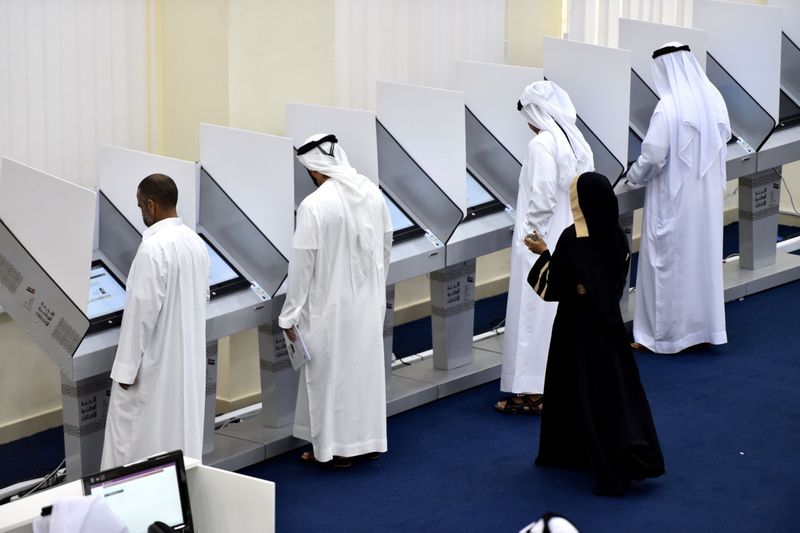
The current political system cannot be labeled as “one-party” or “dominant party” regime, though elements of such regimes apply to the UAE. Magaloni and Kricheli[1] argue that such regimes aim to bargain with elites and serve as mobilizers of mass support, both with the goal to stabilize the regime and minimize threats to the regime. The FNC supports this argument: the 20 members picked by the Emirs could be a way to please elites who want to have a stronger say in politics, while opening up the remaining 20 seats increases citizens’ involvement and provides a way for citizens to feel that they are participating in the political process.
[1] Magaloni, Beatriz and Ruth Kricheli (2010). Political Order and One-Party Rule. Annual Review Of Political Science Vol. 13: pp. 123–43.
Online Sources:
Government and Political System
The political framework of the United Arab Emirates

